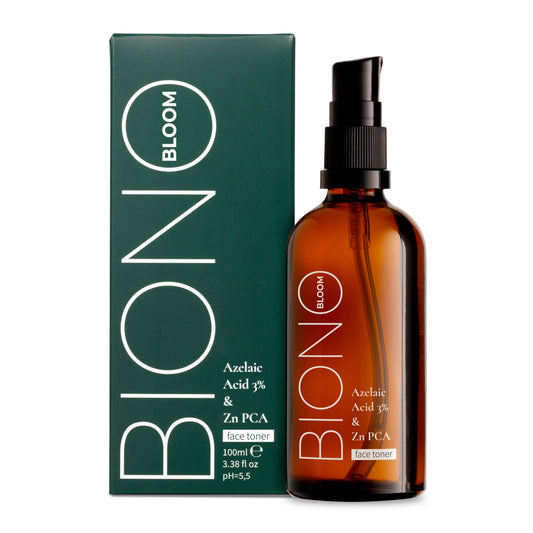

What does facial toner do and why is it worth using?
For years, facial toner was treated as an optional step, an addition to the routine that many people gave up without much thought. Meanwhile, a well-chosen toner can genuinely transform the condition of the skin — preparing it for subsequent cosmetics, replenishing hydration, and restoring balance to the skin after cleansing. More and more people are asking what a facial toner does and if it's really worth making space for it on the bathroom shelf. This guide explains the mechanism of action of this product, shows its real benefits, and advises on how to choose a formula tailored to individual skin needs.
What a facial toner does in daily skincare
When we wonder what a facial toner does, the simplest way to describe it is as a link between cleansing and proper skincare. After washing the face with a gel or milk, the skin can be slightly dehydrated, and its natural pH is often disturbed. Facial toner helps balance the skin, replenish moisture, and create an optimal base for serum and cream. It is thanks to the toner that subsequent layers of skincare are absorbed more efficiently and work more effectively, and the skin regains comfort from the very first seconds.
It is worth noting that modern facial toner is a completely different product from its counterparts of years past, which were mainly alcohol-based and dried out the epidermis. Today, formulas are gentle, rich in moisturizing and soothing ingredients, and their purpose is to support the skin's protective barrier, not compromise it. Clinical practice shows that people who regularly use a well-chosen toner notice an improvement in hydration and even skin tone faster, because their skin functions under more stable conditions.
How facial toner works on the skin
To understand the real benefits, it's worth knowing how this cosmetic works. Facial toner is usually applied to cleansed skin, and its active ingredients penetrate the epidermis, replenishing water loss and regulating the skin's microenvironment. Depending on the formula, toner can moisturize, exfoliate, soothe, or normalize sebum secretion. This means that one simple step can achieve several goals simultaneously, without overburdening the skin.
The effect of the toner is best seen in combination with the rest of the routine. Here are the most important functions a well-formulated facial toner can perform:
- Restores the skin's proper pH, disturbed by water and cleansing products.
- Replenishes hydration and reduces the feeling of tightness after cleansing.
- Improves the absorption of serum, cream, and other active ingredients.
- Removes residual impurities and products that were not removed by gel or milk.
- Soothes irritation and refreshes the complexion, giving it a healthier look.
Thanks to such a wide range of action, facial toner has become one of the pillars of conscious skincare, not just an add-on. The key, however, remains choosing a formula consistent with the needs of a particular skin type, which will be discussed further in this guide.

Restoring the skin's proper pH
One of the most important answers to the question of what a facial toner does is pH regulation. Healthy skin has a slightly acidic pH, oscillating around 4.7–5.5, which forms the so-called hydrolipid barrier protecting against bacteria and water loss. Washing the face, especially with products that have a higher pH, temporarily disrupts this balance and makes the skin more prone to irritation and dryness.
A well-chosen facial toner helps to restore the proper pH faster, so the skin does not remain in an unfavorable state for too long. In practice, this means a reduced risk of tightness, redness, and skin reactivity. People with sensitive skin particularly appreciate this effect, as stable pH translates into calmer, less irritated skin and better tolerance of subsequent cosmetics in the routine.
Hydration and refreshment for the complexion thanks to toner
Another significant benefit is hydration, which plays a primary role in modern formulas. Facial toner supplies the skin with water and moisture-binding substances, such as hyaluronic acid, glycerin, or panthenol, making the skin immediately softer and smoother. This is especially important for people with dry and dehydrated skin who experience discomfort right after washing their face.
Regular use of toner brings visible results, especially when the formula is tailored to the skin's needs. The most commonly observed moisturizing benefits include:
- A noticeable reduction in feelings of tightness and roughness.
- A more radiant, rested complexion after just a few days.
- Better makeup adhesion and more even foundation application.
- Reduced dryness in particularly vulnerable areas, such as the cheeks.
- An overall feeling of freshness and comfort that lasts all day.
It's important to remember that toner alone won't replace a cream — its role is to hydrate and prepare the skin, while the task of subsequent products is to lock in that moisture. Therefore, consistent combination of toner with a serum and cream appropriate for a given skin type yields the best results.
Types of facial toners and their applications
The market offers many types of toners, so it's worth knowing what distinguishes them and what needs they address. The choice of the right product depends on the skin type, its condition, and the desired effects. A moisturizing toner will work differently than an exfoliating or normalizing one, which is why a conscious selection of the formula is crucial for the final outcome of the skincare routine.
To help orient yourself, here is an overview of the most popular types of facial toners:
- Moisturizing toners — with hyaluronic acid and glycerin, ideal for dry and dehydrated skin.
- Exfoliating toners — with AHA and BHA acids, smoothing and improving skin tone.
- Normalizing toners — with niacinamide or zinc, for oily and combination skin.
- Soothing toners — with panthenol, allantoin, or plant extracts, for sensitive skin.
- Brightening toners — supporting the reduction of discoloration and evening out skin tone.
Each of these types addresses different needs, so there isn't one universal facial toner that is ideal for everyone. The key is to analyze your own skin and choose a product whose action genuinely responds to its challenges, rather than being guided solely by trends or packaging.

How to choose a facial toner for your skin type
Effective skincare always begins with an accurate diagnosis of skin needs, so choosing a toner should start with determining your skin type. Oily and blemish-prone skin responds best to normalizing and lightly exfoliating formulas that regulate sebum and reduce blackheads. Dry and sensitive skin, on the other hand, needs moisturizing and soothing toners, free of alcohol and irritating fragrances.
In practice, it's worth observing your skin's reaction to the introduced product for at least two weeks. If, after using the toner, the skin is smooth, comfortable, and better hydrated, that's a sign that the formula has been chosen correctly. However, if tightness, stinging, or redness appears, it's worth switching to a gentler product. Experience shows that a well-chosen facial toner should never cause discomfort or excessive dryness.
How to properly use facial toner
Even the best product will not work to its full potential if applied incorrectly, which is why application technique is of great importance. Facial toner is applied to cleansed skin, as the second step in the routine — after washing and before serum. It can be spread with your hands, gently patting it into the skin, or applied with a cotton pad if you also want to remove residual impurities.
To get the most out of your toner, it's worth following a few simple rules:
- Apply toner to slightly damp skin to better bind moisture in the epidermis.
- Do not rub the skin hard — gentle patting works more effectively and gently.
- Immediately after toning, apply serum and cream to lock in moisture.
- Adjust the frequency to your needs — most toners can be used morning and evening.
- Introduce toners with acids gradually and do not combine them with other strong exfoliants on the same day.
Consistency is more important here than intensity. Regular, gentle use of toner brings much better results than sporadic, aggressive treatments. Incorporated into the daily routine, facial toner becomes an inconspicuous yet effective support for healthy and radiant skin.
Summary — what to remember about facial toner
Facial toner is much more than a cosmetic additive — it is a product that restores skin balance, replenishes moisture, and prepares the complexion for subsequent stages of care. Answering the question of what a facial toner does, one can point primarily to pH regulation, better absorption of serum and cream, as well as real comfort and freshness of the complexion after each cleansing. The key to success remains choosing a formula tailored to the individual skin type and its current needs.
If you are just starting to build a conscious skincare routine, facial toner will be an excellent and simple first step. Introduce it gradually, observe your skin's reaction, and combine it with serum and cream to fully utilize its potential. In case of doubts about product selection, it is worth consulting with a cosmetologist who can help match the care to the specific challenges of your skin.