
Facial toner
-
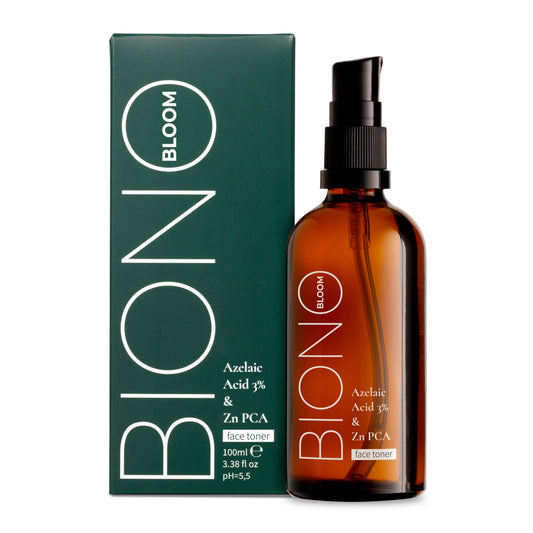
Facial toner with azelaic acid 3% "Anti-Pollution"
Vendor:BIONO BLOOMRegular price From 17,50 zł PLNRegular priceUnit price per
Cosmetics and home fragrances store in Warsaw, Poznań, Wrocław, Kraków, Gdańsk, Gdynia, and Sopot. Convenient online shopping with fast delivery straight to your door.
Questions and Answers
What is facial toner and why should you not skip this step in your skincare routine?
Facial toner is an often-overlooked yet crucial skincare product that acts as a bridge between cleansing and moisturizing. After cleansing, even with the most gentle cleanser, the skin's pH is disturbed (often rising to 7-8), and the natural protective barrier is weakened. Toner restores the optimal pH to 5-5.5, allowing the skin to regenerate its protective barrier faster and better prepare for subsequent products. Furthermore, modern toners remove any remaining makeup, sebum, and impurities that may have remained after cleansing, while simultaneously providing a first layer of hydration and active ingredients.
Skipping toner is a waste of your entire skincare routine's potential. Studies show that skin properly prepared with toner absorbs up to 30% more active ingredients from serums and creams. Toner acts like a sponge that fills with water – damp skin after toner application is much more receptive to the hydrophobic ingredients of subsequent products. This is especially important when using expensive serums with retinol, vitamin C, or peptides – without toner, you lose some of their potential. Modern toners are not the alcohol-based, drying lotions of the past, but advanced therapeutic formulas that deliver valuable ingredients such as exfoliating acids, antioxidants, and moisturizing ingredients.
What types of toners are there and how to choose the right one for your skin type?
The toner market today offers several product categories tailored to different skin needs. Moisturizing toners are the most versatile, containing hyaluronic acid, glycerin, and aloe vera, making them ideal for normal, dry, and sensitive skin. Exfoliating toners contain AHA, BHA, or PHA acids and are designed for oily skin with pores and imperfections. Regular use improves texture and brightens complexion. Regulating toners with niacinamide, zinc, or fairy godmother extract are effective for combination and problem skin, controlling sebum production. There are also anti-aging toners with peptides and antioxidants, and soothing toners with centella asiatica, panthenol, and allantoin for overactive skin.
Choosing a toner should consider not only your skin type but also its current condition. Oily skin will appreciate toners with salicylic acid (BHA), which penetrates pores and prevents blackheads, or with the addition of niacinamide, which mattifies and tightens pores. Dry and dehydrated skin needs rich toners, also called "skin" in Korean skincare – thicker, almost essence-like, full of humectants and moisturizing ingredients. Sensitive skin requires minimalist formulas free of alcohol, perfume, and acids, with soothing ingredients like cucumber or chamomile extract. For mature skin, it's worth looking for toners with antioxidants like vitamin E, resveratrol, or coenzyme Q10, which protect against oxidative stress. If your skin changes seasonally, use a lighter, regulating toner in summer and a more nourishing and moisturizing one in winter.
How to properly apply facial toner to use its full potential?
There are two main methods of applying toner, each with its own unique benefits, and the choice depends on the product type and personal preference. The first is manual application – after washing your face, on damp skin (do not wipe it completely dry), pour a small amount of toner into your hands, warm it briefly, and gently pat into the skin with your fingertips, moving from the center of your face outward. This method maximizes absorption, allows you to feel the skin's texture, and is the most economical. The second method is application with a cotton pad – soak a cotton pad or reusable pad with toner and wipe your face using gentle motions. This is great for exfoliating toners, which also mechanically remove dead skin cells, and for oily skin, where gentle rubbing removes excess sebum.
Timing and application technique are crucial to toner's effectiveness. It's best to apply it to slightly damp skin immediately after cleansing – the ideal time window is 30-60 seconds after cleansing, before skin dries completely. If you're layering toners (the popular Korean "7 skin method"), apply 2-7 thin layers of toner, waiting about 30 seconds between each layer for the product to absorb. This method is especially effective for dehydrated skin and has the effect of "plumping" the skin with moisture. After toner, wait about 1 minute before applying serum – skin should be slightly damp, but not wet. Avoid rubbing your face aggressively with a cotton pad, especially around the eyes – gentle patting or pressing is much gentler on blood vessels and doesn't stretch the skin. In the morning, always apply toner before other products, but remember that the last step should be a cream with SPF.
Which active ingredients in toner are the most valuable and what should you pay attention to?
An effective toner isn't just a water with perfume – it should contain functional active ingredients tailored to the specific needs of the skin. Hyaluronic acid in various molecular weights is an absolute must – it provides intense, multi-level hydration that prepares the skin for subsequent products. Niacinamide (vitamin B3) at a concentration of 2-5% is a versatile ingredient that regulates sebum, strengthens the skin barrier, brightens discolorations, and soothes inflammation – ideal for most skin types. Glycerin is a humectant that attracts water from the atmosphere and retains it in the skin, working synergistically with hyaluronic acid. Allantoin and panthenol (provitamin B5) soothe irritation, accelerate regeneration, and are essential for sensitive skin.
Properly formulated acids are key in exfoliating toners. BHA (salicylic acid) at a concentration of 0.5-2% is lipophilic, meaning it penetrates pores filled with sebum – ideal for oily and acne-prone skin. AHA (glycolic, lactic, and mandelic acids) at a concentration of 5-10% work on the surface, exfoliating dead cells and lightening discolorations – perfect for mature and discolored skin. PHA (polyhydroxy acids) are a gentler alternative for sensitive skin. Antioxidants like green tea extract, vitamin E, resveratrol, and coenzyme Q10 protect against free radicals and oxidative stress. What to avoid? High concentrations of denatured alcohol (above the 5th position in the INCI), artificial colors, and intense perfumes, which have no skincare value and can irritate the skin. A well-formulated toner has a pH close to the skin's natural pH (4.5-5.5) and a transparent composition with active ingredients at the top of the INCI list.
Is toner really necessary for skincare, or can it be skipped?
The question of whether toner is necessary is controversial in the skincare world. Technically, you can create an effective routine without toner—if you use a gentle cleanser with the right pH and apply a serum to damp skin immediately after cleansing, the basic functions are fulfilled. A minimalist skincare routine consisting of cleanser, serum, cream, and SPF may be sufficient for very young, healthy skin without any particular problems. However, in practice, this means forgoing an additional layer of active ingredients, better skin preparation, and optimized absorption of subsequent products—a significant waste of potential.
For most people, toner is highly recommended, especially in certain situations. If you have oily, acne-prone, or enlarged pores skin, exfoliating toners with acids are almost essential for controlling blemishes. For dehydrated skin that feels both oily and dry, hydrating toners applied in layers can do more than the most expensive serum. After age 30, when skin regeneration slows down, every extra layer of active ingredients matters. Toner is also an ideal carrier for ingredients that work well in water, like niacinamide or acids—not all of which can be effectively incorporated into serums or creams. However, if your skin is very sensitive and reacts to any new product, you can start with a toner-free routine and add it later once your skin has calmed down. Ultimately, your decision should be based on your own skin and budget—if you have to choose, serums and SPF are more critical, but ideally, toner should be a permanent part of a healthy skincare routine.