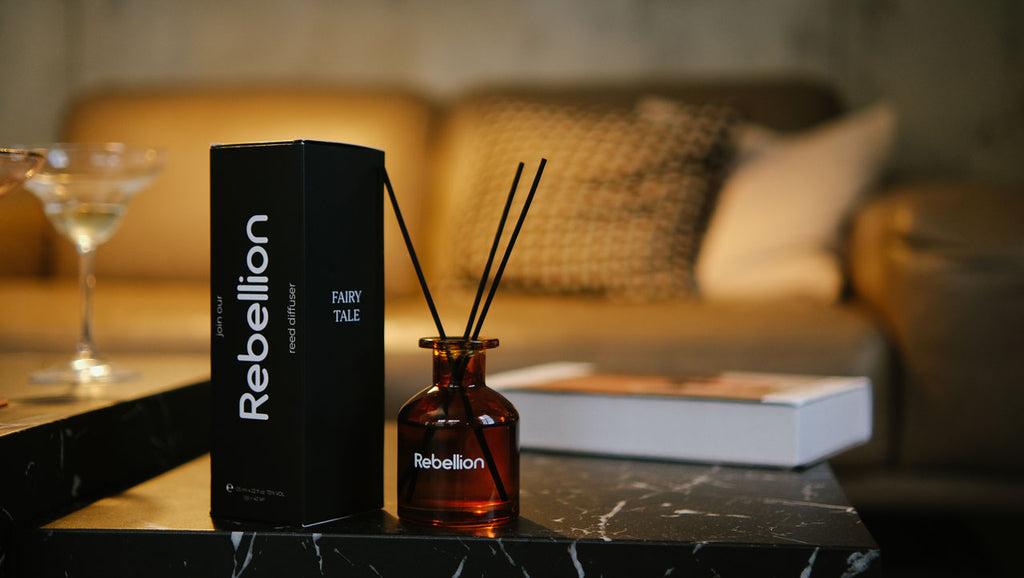

Scent diffusers — how to choose the perfect home fragrance
Imagine walking into two identically furnished apartments. The same furniture, the same wall color, the same lighting. Yet, in one, you want to stay longer, and from the other, you leave without a reason. Most often, this is decided by something you can't see — the scent. And that's why the question "scent diffusers — how to choose" is much more interesting than it seems at first glance.
Scent diffusers — how to choose and why it's more important than you think
Scent affects us faster than any other stimulus. Before you consciously think "it smells nice here," your brain has already judged the space as safe, cozy, or unfamiliar. A scent diffuser is the simplest tool that controls this impression — silently, without buttons, and effortlessly on your part, all day long.
The problem is that most people choose a diffuser "by nose" in a store, where conditions are completely different from home. Hence frequent disappointments: an aroma that enchanted on the shelf is barely noticeable in the living room, or on the contrary — it overwhelms right from the threshold. A good choice is not a lottery, but a few conscious decisions regarding type, intensity, and placement.
Therefore, treat this guide as a conversation with someone who has sold hundreds of such products and seen all possible mistakes. I will show you what to really pay attention to, what to avoid, and how to make scent diffusers work for your mood, not just stand nicely on the dresser.

The secret no salesperson will tell you
Here's something rarely talked about: scent doesn't "hang" evenly in the air — it flows. Warm air carries it upwards, drafts disperse it, and air conditioning can suck it out of a room in minutes. That's why the same scent diffuser smells perfect in one interior, but seems "broken" in another, even though there's nothing wrong with the product.
The second truth concerns room size. A small reed diffuser has no chance of filling an open space connected to the kitchen, and a strong diffuser in an 8 m² bedroom will turn relaxation into a headache. So before you ask "how to choose a scent diffuser," scan the space and think about its cubic volume — this is one decision that saves the most disappointment.
And the third, most surprising thing: we get used to smells. After a few days, you stop noticing your own diffuser, although guests immediately detect it. This doesn't mean it has stopped working — your nose has simply "gotten bored." Conscious users simply periodically change the composition, giving their senses a breath of freshness.
Scent diffusers — how to choose the one in glass for your lifestyle
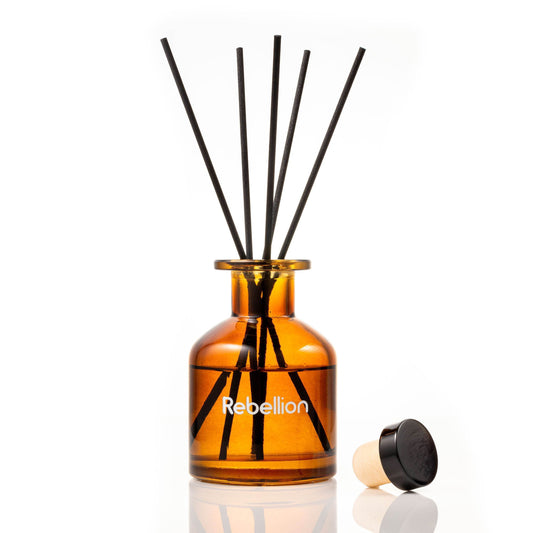
There isn't one "best" diffuser — there's the best one for you. A natural glass diffuser, with reeds that absorb the oil, works silently and completely naturally, which is why it fits almost any interior. The whole art lies in matching its parameters to the space and your preferences — and there are several differences worth noting.
- Capacity and bottle size — larger glass and more oil mean a stronger, longer-lasting scent; match them to the room's cubic volume.
- Number and type of reeds — rattan absorbs and releases aroma more intensely than thinner fibers, so you use them to adjust the strength.
- Scent family — woody, citrus, floral, or spicy; here, the role of the room and your mood decide.
- Style of the glass bottle — the diffuser is visible, so it's also a decorative element that should harmonize with the interior.
- Quality and naturalness of the oil — a clean, well-composed base smells fuller and lasts longer than a cheap substitute.
If you're hesitating to buy, ask yourself one question: do you want a delicate, discreet background, or a distinct scent that greets you right from the threshold? The first answer leads to a smaller bottle and a few thin reeds, the second — to a larger glass and a full bundle of rattan that will spread the aroma throughout the room.
The olfactory map of the home, or a different aroma for each room
Here's where the real fun begins. Professionals don't treat a home as a single space, but as a map of moods — each room has a different role, and thus a different scent. This arrangement means that as you move through the house, you take a mini-olfactory journey, even without realizing it.
- Hallway — a distinct welcoming note, as it creates the first impression of the entire interior.
- Living room — elegant, "social" woody or floral-woody compositions that don't get boring with guests.
- Bedroom — soothing lavender, cashmere, delicate musk; a scent that helps you slow down.
- Bathroom — clean "spa-like" aromas: cotton, white tea, sea breeze.
- Kitchen — fresh citrus and herbs that blend with cooking smells.
Does that sound like overkill? Not at all. Just start with two zones — e.g., the entrance and the living room — to feel the difference. It is this olfactory map that transforms an ordinary apartment into a space that "has its own atmosphere," and scent diffusers become its invisible set designer.
Why the same scent smells different at your place and your neighbor's
This is one of the most interesting paradoxes of home fragrances. You buy exactly the same scent diffuser, yet at your neighbor's it seems sweeter, at yours more woody, and at your friend's barely noticeable. Magic? No — physics and biology combined.
First, the environment matters. Temperature, humidity, materials in the room, and even whether there are animals or plants in the house — all of this modifies how scent molecules spread and how long they last. A warm, humid interior will "develop" the aroma more strongly than a cool, airy room. That's why the same product can lead two different lives in two homes.
Second, your own nose matters. Olfactory sensitivity is individual, and it also depends on your mood, time of day, and what you've eaten. A scent that is "just right" for you might be intense for someone else. This is not a product defect — it's simply a reason to choose a diffuser based on your own feelings, not someone else's reviews.

How many reeds, how many drops — what no one tells you about intensity
Most guides end with "choose a scent," as if the rest takes care of itself. Meanwhile, it's the regulation of aroma strength that determines whether the diffuser will be pleasant or overwhelming. The good news: you have full control over this, and without any extra cost.
In a reed diffuser, the rule is simple — more reeds mean a stronger scent, fewer mean a more subtle one. In a small room, start with two or three and observe. Every few days, it's worth turning the reeds over to "refresh" the intensity; this is a small trick that can extend the feeling of freshness by as much as half.
Also remember to care for the glass and reeds. Every few days, it's worth turning the rattan with the dry end upwards to "awaken" the aroma, and when the reeds get clogged, simply replace them with new ones — they, not the bottle itself, wear out fastest. And one overarching rule: it's better to add reeds gradually than to overdo it right away, because excess is hard to reverse, and a deficit can be made up in a minute.
Mistakes that ruin even the best diffuser
Sometimes it's not the product that fails, but the way it's used. Below are the most common mistakes seen among buyers — and easily eliminated once recognized.
- Wrong size for the room — a small diffuser in a large living room, or a strong one in a cramped bedroom.
- Placement in a draft — near a window or ventilation, the scent escapes before it can fill the interior.
- Ignoring cubic volume — choosing "by eye," without considering height and open space.
- Lack of scent rotation — the same aroma for months means you stop noticing it.
- Skimping on oil quality — a cheap refill smells artificial and disappears faster than you'd expect.
Most importantly, each of these errors is free to fix. Move the diffuser a meter from the window, decrease or increase the number of reeds, change the composition every season — and suddenly the same product starts working as it should have from the beginning. Scent diffusers forgive a lot, if only given the right conditions.
Scent as a time machine — how a diffuser changes mood
Finally, something that changes perspective. Smell is the only sense directly connected to the emotional and memory centers of the brain. That's why one breath can instantly transport you to a vacation from years ago or a festive childhood evening. A scent diffuser is therefore not a decoration — it's a discreet mood switch.
You can use this consciously. Energizing citruses in the morning help you wake up and gather your thoughts, warm vanilla or sandalwood in the evening signal to your body that it's time to slow down. By creating such an "olfactory daily rhythm," you start treating home fragrance as a tool, not just a pleasant addition — and that's when you discover its true value.
This is also why a well-chosen diffuser can be the most lasting memory of someone's home. People forget what your living room looked like, but they remember how they felt in it. And for that feeling, more often than you think, the background scent is responsible.
Summary: choose consciously, enjoy daily
Choosing a diffuser is not a matter of luck, but of a few simple decisions: match the type to your lifestyle, the strength to the room size, and the scent to the role the interior is to play. Once you understand how aroma flows and develops, you'll stop guessing — and start consciously creating the ambiance of your home.
The best part is that you don't need much to get started. One well-chosen scent diffuser in the right place can transform the perception of an entire space. And when you feel the difference, you'll want to go further — because a home that smells beautiful simply makes you want to visit more often and makes it harder to leave.