
Alcohol-free face tonic: how to choose the best one
Among all skincare steps, toner is often underestimated, yet it's the one product that can make a routine complete and balanced. Many people skip this step or habitually reach for aggressive, alcohol-based toners, unaware that gentle, alcohol-free formulas work completely differently—mildly, caringly, and much more effectively. Understanding why to use toner and how to choose the right one helps build a skincare routine that genuinely improves skin condition.
Why use alcohol-free facial toner?
Alcohol-free facial toner completes the cleansing stage and restores the skin's comfortable, slightly acidic pH, which is temporarily disrupted after contact with tap water and cleansing products. Additionally, it moisturizes, soothes, and prepares the skin for serum and cream application. People with dry, sensitive, and dehydrated skin particularly appreciate such formulas, as they do not dry out the skin or cause the tightening sensation typical of alcohol-based products.
Modern alcohol-free facial toners have long moved beyond the image of a stinging liquid with a sharp scent, inherited from cosmetics of decades past. Instead of aggressive degreasing, they offer caring treatment with moisturizing and soothing ingredients. In the following sections, we will explain how to choose the best option for your skin type, what the differences are between formulas for sensitive skin, brightening toners, and those with acids, and how to properly incorporate this product into your daily beauty ritual.

Key benefits of an alcohol-free formula
The first and main reason to reach for an alcohol-free facial toner is the protection of the hydrolipid barrier. Denatured alcohol gives an immediate feeling of freshness and mattness, but at the same time, it washes away natural lipids and dehydrates the skin. In response, the skin often increases sebum production, so a product intended to dry oily skin actually makes it even shinier. Alcohol-free formulas are free from this drawback and work in harmony with the skin's physiology.
The second reason is hydration and comfort. Gentle toners contain humectants like glycerin and hyaluronic acid, which attract and retain water, as well as plant extracts that reduce skin reactivity. In practice, switching from an alcohol-based toner to a mild formula often solves problems that people have struggled with for years: the feeling of tightness disappears, redness is reduced, and the skin becomes calmer and more even after just a few weeks of regular use.
The third reason relates to the effectiveness of subsequent skincare. Alcohol-free facial toner lightly moisturizes the top layer of the epidermis, allowing serums and creams to spread and absorb better. This is particularly important for active ingredients: on properly prepared skin, they work more evenly and effectively. In this way, toner ceases to be a formality and becomes a full-fledged step that strengthens the entire skincare system and makes it logically complete.
How to choose the best face toner
When it comes to choosing the best face toner, it's worth abandoning the illusion that there's one perfect product for everyone. The best one is that which suits your skin type and addresses a specific concern: hydration, soothing, adding radiance, or gentle exfoliation. Therefore, instead of searching for an abstract leader, it's wiser to follow your own needs and carefully read the product's ingredients.
Tips to help you choose the best face toner for various needs:
- Dehydrated skin — hyaluronic acid, glycerin, aloe, and panthenol to retain water.
- Sensitive skin — niacinamide, centella extract, thermal water, minimal fragrances.
- Oily and combination skin — lightweight formulas with niacinamide or a gentle percentage of acids.
- Dull, lusterless skin — antioxidants like vitamin C or green tea extract.
- Warning sign — alcohol denat. or SD alcohol among the first ingredients.
It's also worth noting the conciseness of the formula. The shorter and simpler the ingredient list, the lower the risk of irritation, which is particularly important for reactive skin. If the skin is healthy and tolerates active ingredients well, you can confidently choose multi-functional toners that combine moisturizing with additional care. In any case, the golden rule remains unchanged: it's advisable to test a new product for a few days and observe the skin's reaction before drawing conclusions.
Alcohol-free facial toner: the benefits of a gentle formula
Alcohol-free facial toner stands out primarily for its gentle action, and this characteristic makes it a universal solution for most skin types. Instead of aggressive degreasing, such products gently complete cleansing without disrupting the hydrolipid barrier. As a result, after toning, the skin remains hydrated and calm, without the unpleasant feeling of tightness often associated with alcohol-based toners.
Another significant advantage is its safety for the skin's barrier function. A healthy protective barrier retains water in the epidermis and defends against external factors, while high concentrations of alcohol gradually weaken it. Alcohol-free facial toner, on the contrary, often contains barrier-strengthening ingredients—niacinamide, ceramide-like substances, and plant extracts. This allows it to be used daily even when the skin is in an unstable or irritated state.
The psychological aspect should also not be underestimated. Many people avoided toners for years precisely because of the discomfort associated with alcohol-based products, and a gentle alcohol-free formula allows them to return to this step without unpleasant sensations. In practice, the switch to a gentle toner often marks the moment when skincare transforms from a chaotic collection of products into a conscious and enjoyable daily ritual that one wants to stick to.
Toner for sensitive facial skin
Sensitive skin reacts to the slightest stimuli with redness, stinging, and a feeling of discomfort, which is why products for it are chosen with particular care. A toner for sensitive facial skin should have a maximally concise composition and not contain potential irritants—alcohol, aggressive acids, intense fragrances, and dyes. The simpler the composition, the lower the risk of an undesirable reaction, which is why minimalist formulas almost always win.
What to look for when choosing a toner for sensitive facial skin:
- Soothing ingredients — aloe, centella extract, panthenol, bisabolol.
- Moisturizing humectants — glycerin and hyaluronic acid for skin comfort.
- Gentle base — thermal or mineral water instead of aggressive solvents.
- Alcohol- and fragrance-free — fewer irritants for reactive skin.
- Short ingredient list — minimal ingredients that could cause a reaction.
Cosmetologists' experience shows that people with couperose-prone skin benefit most from cooling, soothing toners applied by gently patting with hands, rather than rubbing with a cotton pad. This careful method reduces mechanical irritation and helps the skin remain calm. The reliable indicator is simple: if there is no discomfort after application, and the skin feels hydrated and soothed, then the formula suits you and can be safely incorporated into your regular skincare routine.

Skin brightening toner
A dull, tired facial appearance is a common problem for city dwellers, where stress, lack of sleep, and polluted environments take their toll. Skin brightening toner aims to restore freshness and a healthy, inner glow to the complexion through antioxidants and tone-evening ingredients. Such formulas often contain vitamin C, niacinamide, green tea extracts, or plant polyphenols that neutralize free radicals.
The mechanism of action is quite logical: antioxidants protect the skin from oxidative stress, and moisturizing ingredients restore its firmness and ability to reflect light, making the face look more radiant. Skin brightening toner works best as part of a set—in combination with good cleansing, regular moisturizing, and essential sun protection. On its own, no product works miracles, but as an element of a well-thought-out system, it yields a visible and stable result.
At the same time, it's worth remembering that skin radiance depends not only on cosmetics but also on the body's overall condition—hydration levels, sleep quality, and nutrition. Therefore, skin brightening toner should be treated as support, not the sole solution to the problem of dull skin. If the cause lies in the accumulation of corneocytes, gentle exfoliation will be a helpful complement, which we will address in the next section.
Acid toner for face
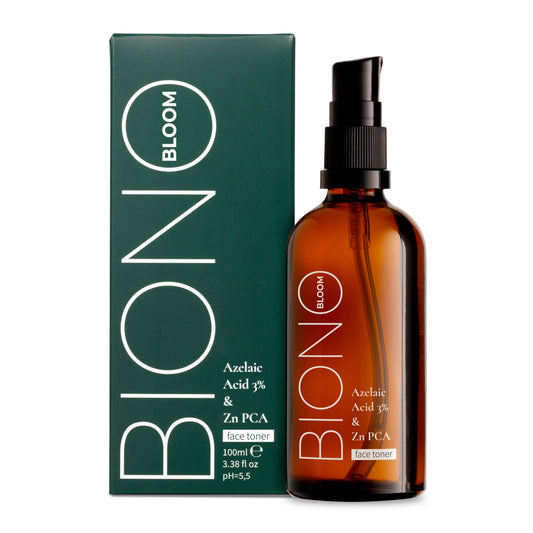
A separate category is an acid toner for the face—a product that combines toning with gentle chemical exfoliation. Depending on its composition, it may contain alpha-hydroxy acids, such as glycolic or lactic acid, or a beta-hydroxy acid, namely salicylic acid. AHAs primarily work on the surface, evening out tone and texture, while salicylic acid penetrates pores and works well for acne-prone skin with enlarged pores.
What benefits does an acid toner for the face offer:
- Gentle exfoliation — removes dead skin cells, restoring skin smoothness.
- Even skin tone — reduces the visibility of post-acne hyperpigmentation and uneven tone.
- Cleaner pores — helps prevent the formation of blackheads and breakouts.
- Radiance — renewed skin reflects light better and looks fresher.
Despite its effectiveness, such a product requires a thoughtful approach. Acids increase skin sensitivity to UV radiation, so toner should primarily be used in the evening and always combined with daily sun protection. For individuals with dry or reactive skin, it's better to start with low frequency—two to three times a week—and carefully observe the reaction. By adhering to these simple rules, an acid toner for the face becomes an effective tool for skin renewal and brightening.
How to incorporate toner into your daily routine
Even the best product won't work without proper application technique, so the order of steps matters. The classic scheme is simple: first cleanse, then tone, followed by serum and cream. Toner is applied immediately after washing the face, when the skin is still slightly damp—this allows moisturizing ingredients to work more effectively. This basic rule applies to both morning and evening skincare.
There are usually two application methods, and each has its advantages. The first is a cotton pad, which easily glides over the face, additionally picking up residual impurities. The second, gentler option, is application with hands by gently patting, which is particularly recommended for sensitive skin and allows for more economical product use. Hydrating alcohol-free facial toner can be used daily, while formulas with acids are used only a few times a week.
The combination of toner with other active ingredients and its storage conditions deserve separate attention. Acidic formulas should not be unnecessarily combined in one routine with strong retinoids or high concentrations of vitamin C, as this increases the risk of irritation. Toners with unstable ingredients are best kept in a dark, cool place, and in summer, a chilled product pleasantly refreshes and reduces morning puffiness. Most importantly, however, is observing the skin's reaction and adapting skincare to its actual needs.
Healthy skin starts with balance
Toner has long ceased to be an optional extra and has rightfully earned its place in daily skincare. A gentle alcohol-free facial toner restores balance after cleansing, moisturizes, and prepares the skin for subsequent products without compromising its natural protection. Whether you choose a soothing formula for sensitive skin, an antioxidant brightening product, or an acid toner for renewal—the most important thing is that it meets your individual needs.
By considering your skin type, ingredients, and your own sensations, you can easily create a routine that works for you. The search for the best facial toner is primarily about getting to know your own skin, rather than chasing trendy names and loud promises on labels. Don't be afraid to try different textures and formulas until you find one that truly makes your skin feel comfortable. If you approach the topic thoughtfully and consistently, even this small step will noticeably improve your facial appearance and make your skin calmer, better hydrated, and more radiant.