
Office Fragrances – How to Choose the Perfect Fragrance for Work
Scent is one of the most underrated elements of office design. Although sight and sound dominate everyday workplace design, research shows that the right office scents can have a real impact on employee concentration, well-being, and productivity. Choosing the right scent isn't a whim, but a conscious decision that impacts the entire workplace atmosphere.
Office Fragrances – More Than Just a Pleasant Aroma
Office fragrances are a topic that's gaining increasing attention among business owners, managers, and workplace design specialists. A well-chosen fragrance can not only neutralize unpleasant kitchen or printer odors but also create a cohesive, professional space identity. In modern offices, fragrances are increasingly used as a building block for organizational culture and brand image.
Professional office fragrances differ from regular air fresheners primarily in the quality of their ingredients and the longevity of their aroma. They are based on natural essential oils or carefully crafted fragrance blends that don't irritate mucous membranes or cause headaches—a common problem with cheaper, synthetic products. Choosing the right fragrance ensures the comfort and health of your entire team.

Why office fragrances affect work efficiency
Aromatherapy has been used for years to improve well-being, but its potential in the office environment remains underappreciated. The scent of lavender has a relaxing and stress-reducing effect, lemon and mint stimulate concentration, and eucalyptus purifies the air and supports the respiratory system. In an office where employees spend eight or more hours a day, these subtle differences can have a real impact on work performance.
Office fragrances operate at a subconscious level – they don't overwhelm, but create a backdrop that fosters a sense of comfort and security. Customers visiting a well-smelling office subconsciously rate the company higher and linger longer in the reception area or conference room. It's a small detail that can make a decisive first impression and get a business meeting off to a simply better start.
The best fragrances for the office – which notes to choose
When choosing the best fragrances for the office , it's worth considering the room's function and the number of people occupying it. In open-plan spaces, subtle, fresh citrus or forest notes work well, as they won't overwhelm with prolonged exposure. Executive offices or meeting rooms can adopt more complex, woody or oriental compositions, which enhance the interior's prestigious character.
The most frequently recommended and proven fragrance compositions for the office include:
- Lemon and bergamot – stimulate creativity and focus, perfect for the morning
- Peppermint – increases alertness and reduces fatigue
- Lavender – calms and reduces stress, works well during intense work
- Eucalyptus – freshens the air and supports concentration
- Sandalwood – builds prestige, ideal for representative offices
- Green tea – a light, neutral aroma, safe for the entire team
It's worth remembering that reactions to scents vary from person to person, so before implementing a new scent, it's worth conducting a short test with a few employees and gathering their feedback. A well-chosen scent should be perceived by everyone as neutral or positive, never as a distraction.
Office fragrance diffuser – types and applications
An office fragrance diffuser is the most effective tool for evenly distributing fragrance throughout a space. Unlike candles or traditional air fresheners, diffusers operate precisely and safely – without open flames or artificial chemicals. Choosing the right model depends on the office space, power availability, and desired fragrance intensity.
There are four main types of office fragrance diffusers available on the market, each with a different purpose:
- Ultrasonic – turns a water and oil mixture into a cool mist; quiet, energy-efficient, ideal for small and medium-sized rooms
- Nebulizer – atomizes pure oil without water; intense fragrance, best for large open spaces
- Thermoelectric – heats the oil gently; simple operation and low operating costs
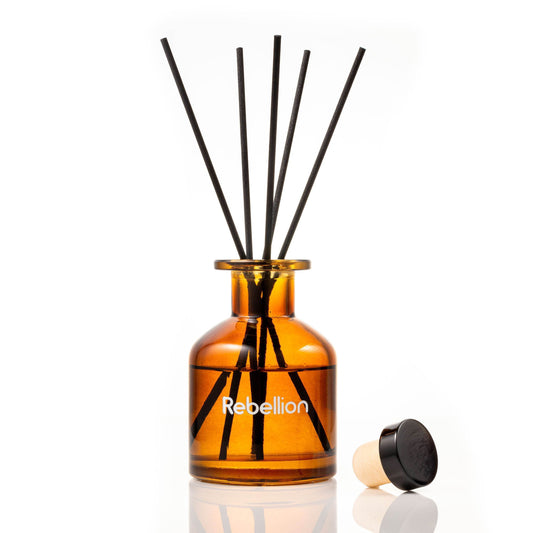
- Stick – passive, no power supply; elegant appearance, good for reception areas and corridors
Each type has its advantages and limitations, so the choice should be tailored to the specific space. In large offices with ventilation systems, nebulizers work best, as they can fill up to several hundred square meters with aroma, while in smaller offices, an elegant reed diffuser placed on a desk will suffice.

Professional office fragrances and employee stress and well-being
Professional office fragrances are not a luxury, but a part of a well-being policy that is gaining increasing importance in organizational management. Companies that prioritize the sensory comfort of their spaces report lower absenteeism rates and higher job satisfaction. Employee well-being is directly linked to the quality of the environment in which they spend most of their day—and scent is an important part of that.
Professional office fragrances are designed for long-term use – their formulas won't cause allergic reactions or overwhelm even after several hours of work in an enclosed space. Many have been dermatologically and allergy-tested, which is especially important in environments where people with sensitive respiratory systems or seasonal allergies work.
Office fragrances for different rooms and zones
Each office area has different scent needs. Matching the scent to the room's character is key to its effective use and avoiding sensory conflicts between zones. It's worth planning an office scent map just as you would plan lighting or temperature—with the understanding that different parts of the space serve different purposes and require different scenting styles.
Here are some sample fragrance recommendations for different office areas:
- Reception and main hall – warm, neutral scents create a professional first impression
- Open space – light, citrus or minty notes that stimulate without being overwhelming
- Conference room – calming compositions with lavender or sage that promote concentration
- Breakroom – refreshing scents of green tea or orange
- Boardroom – deeper, woody or leathery notes emphasizing prestige
This olfactory segmentation gives the office space a distinct rhythm – each zone has its own character that supports the activity taking place within it. Employees intuitively sense this difference and find it easier to adapt their approach to the type of work they are performing – whether it's creative brainstorming or focused data analysis.
How to care for your office fragrance diffuser
A regularly cleaned office aroma diffuser will last longer and be more effective. A neglected device can become a source of unpleasant, fermented aromas or ineffectively diffuse the oil, resulting in higher operating costs and a poor employee experience. A few simple steps will ensure your device will last for years without any loss of performance.
The basic rules for maintaining a fragrance diffuser are:
- Cleaning the tank with water and a few drops of alcohol after each change of scent
- Avoid mixing oils from different brands without checking their compatibility
- Water change every 24–48 hours in ultrasonic models
- Regularly check the condition of the nebulizer membranes and nozzles
- Place the device away from direct sunlight and drafts
It's also a good idea to keep a simple diary of your diffuser's usage—noting which oils were used and in what proportions. This allows you to quickly identify the compositions that work best and avoid repeating combinations that weren't well-received by employees.

How to choose the right fragrance intensity for your office
Even the best office fragrances can be overpowering if they're too intense. The rule is simple: the more people in the room, the more subtle the scent should be. A well-chosen aroma is noticeable upon entering the office, but after a few minutes, it ceases to be the dominant stimulus – this is precisely the goal of professional space scenting.
Practical tips on the dosage and intensity of fragrance in the office:
- For rooms up to 20 m² – 3–5 drops of oil, diffuser operation for 30 minutes every 2 hours
- For open spaces 50–100 m² – nebulizer or diffuser with a timer every hour for 15–20 minutes
- In air-conditioned spaces, the scent spreads faster – reduce the dose by 20–30%
- Collect employee feedback every few weeks and modify the composition or flavor intensity
The key to success is consistency and flexibility – one scent doesn't have to be a year-round presence in the office. It's worth adapting your fragrances to the seasons: in spring, reach for fresh, floral notes, and in autumn and winter, choose warmer, more spicy aromas that create a cozy atmosphere even on cloudy days.
Summary: Office fragrances as an element of the workspace
Office fragrances are a field that combines aesthetics, psychology, and space management into one cohesive element. The right office fragrance diffuser, equipped with a carefully selected blend of oils, can truly transform the work atmosphere—reducing stress levels, increasing focus, and giving the space a professional feel. It's a conscious choice, the effects of which are felt by everyone who enters a well-smelling office.
Professional office fragrances are now an affordable and accessible tool worth incorporating into your work environment strategy. Whether you manage a small office or a vast open-plan space, a good fragrance is one of the smallest investments that yields surprisingly large results. Start by testing, gather feedback, and let the fragrance become an integral part of your space.