
Centella asiatica extract: properties, action and facial care
There are ingredients that appear in cosmetology briefly and then disappear with the season. And then there are those that stick around—because they truly work. Centella asiatica definitely belongs to the latter group. Known in Ayurvedic medicine for over three thousand years, today it's conquering European pharmacies and drugstores as one of the most effective ingredients supporting skin regeneration, soothing, and strengthening. Its popularity is no accident—centella asiatica extract is supported by dozens of scientific studies and millions of satisfied users worldwide.
What is Asiatic Pennywort and where does it come from?
Asian pennywort, known scientifically as Centella asiatica , is a plant in the Umbelliferae family that has been growing wild for centuries in tropical regions of South and East Asia—in India, Sri Lanka, Indonesia, China, and Korea. In traditional Chinese and Ayurvedic medicine, it has been used both internally and externally to heal wounds, scars, skin inflammation, and strengthen the nervous system. In Korean culture, tigers are said to have rolled in pennywort thickets to heal wounds after fights—hence its English name, tiger herb.
Centella asiatica has found its way into modern cosmetology thanks to the popularity of K-beauty, a Korean skincare trend that has had a huge impact on the global cosmetics market for over a decade. Korean brands were the first to widely incorporate centella asiatica extract into creams, serums, toners, and masks, presenting clinical trial results confirming its effectiveness.
The success of centella asiatica in cosmetology isn't based solely on a trend, however. This plant contains an exceptionally rich set of biologically active substances that act on the skin in a multifaceted manner—and it is precisely this comprehensiveness that distinguishes it from many other botanical ingredients, which often offer one specific property, while centella offers several simultaneously.

Active ingredients of the Asian pennywort extract
Centella asiatica's effects are primarily due to four groups of active substances: asiaticoside, madecassoside, asiatic acid, and madecassic acid. These are the ingredients that give centella asiatica extract its anti-inflammatory, regenerative, moisturizing, and collagen-stimulating properties. Each of these ingredients plays a slightly different role, and their synergistic action produces a much more potent effect than either alone.
Asiaticoside and madecassoside are triterpene glycosides that penetrate the epidermis and stimulate fibroblasts—cells responsible for collagen and elastin production. In practice, this means that regular use of cosmetics containing centella asiatica actually supports the reconstruction of skin structure, not just superficially smoothing or moisturizing. The effects are more visible the longer and more regularly the product is used.
Asiatic acid and madecassic acid, in turn, have strong anti-inflammatory and antioxidant properties, neutralizing free radicals, reducing redness, and soothing irritation. These ingredients make centella asiatica a popular choice for facial skincare for those with sensitive, reactive skin, prone to rosacea or post-treatment irritation.
Centella asiatica for the face: main care properties
Centella asiatica for the face works on several levels simultaneously, making it an exceptionally versatile ingredient. Primarily, it supports skin regeneration—accelerating the healing of micro-damages in the epidermis, calming irritation, and helping rebuild the protective barrier. For those using strong active ingredients like retinoids or exfoliating acids, it's an almost indispensable skincare companion.
Another key property is its anti-inflammatory effect. Centella asiatica effectively reduces redness, soothes itching, and reduces skin reactivity to external factors. Dermatologists are increasingly recommending cosmetics containing this ingredient for people with rosacea, atopic dermatitis, and skin after laser treatments or chemical peels, where regeneration and soothing are a priority.
The third area of action is its impact on skin aging. Stimulation of collagen synthesis by asiaticoside and madecassoside translates into improved skin elasticity, reduced fine lines, and overall skin firmness. While centella asiatica doesn't work as spectacularly or quickly as retinol, it is significantly gentler and safer, even for pregnant skin, which is a significant advantage in many cases.
Centella asiatica in cosmetics: which products are worth choosing?
Centella asiatica is available in almost every cosmetic formula today. Serums and ampoules with a high concentration of the extract are a choice for those who require more intensive action—after aesthetic treatments, for problematic skin, or during periods of increased skin stress. Creams and balms with centella asiatica are more gentle and ideal for daily care as part of a moisturizing and regenerating routine.
What to look for when choosing a product with Asian pennywort:
- INCI form of the ingredient - look for the following designations: Centella Asiatica Extract, Centella Asiatica Leaf Water, Asiaticoside, Madecassoside, Asiatic Acid, Madecassic Acid
- Concentration - in serums it should exceed 1%, in creams 0.5% is the minimum for a real effect
- Accompanying ingredients - works best with ceramides, panthenol, allantoin and hyaluronic acid
- No irritating ingredients - especially for sensitive skin, avoid products with alcohol denat., strong perfumes and preservatives like MIT
- Pharmacy vs. cosmetic formula – dermatological products often have higher concentrations and are more clinically tested
Centella asiatica is also increasingly appearing in cosmetics in eye care products—correcting dark circles, bags, and fine lines. The delicate skin around the eyes responds particularly well to its regenerative and capillary-strengthening properties, which directly reduces redness and discoloration in this area.

Who is the best person to use Asian pennywort?
While centella asiatica is a safe ingredient for virtually all skin types, certain groups will benefit the most. Sensitive and reactive skin is the first indication—its calming and anti-inflammatory properties provide quick relief from irritation, redness, and hyperreactivity. Those struggling with rosacea often cite centella as one of the few ingredients that truly alleviates symptoms without risking worsening.
Post-treatment skin is another group for which centella asiatica is truly ideal. After chemical peels, fractional lasers, microneedling, or dermabrasion, the skin requires intensive regeneration and protection against inflammation. Products containing centella asiatica extract, when incorporated into the post-treatment protocol, shorten healing time, reduce redness, and reduce the risk of pigmentation complications.
It's also worth remembering about mature skin—Centella asiatica gently but systematically stimulates collagen production. For those who, for various reasons, cannot or prefer not to use retinol, it offers a valuable, well-tolerated alternative in anti-aging care. Results are slower, but the risk of irritation is minimal.
Centella asiatica extract and scars and stretch marks
One of the most documented uses of Centella asiatica is supporting the treatment of scars and stretch marks. The asiaticoside contained in the extract regulates fibroblast activity, limiting excessive collagen production—responsible for the formation of hypertrophic scars—while supporting proper tissue regeneration. This rare and valuable property makes Centella an ingredient in many professional keloid preparations.
In the case of stretch marks, regular use of centella asiatica creams yields the best results on fresh stretch marks—red or pink, those still forming. The earlier you start care, the greater the chance of minimizing them. Old, white stretch marks respond less readily, although you can still see an improvement in skin texture and a subtle brightening.
Centella asiatica is increasingly used in dermatological protocols as a complementary treatment for post-surgical and acne scars. It alone won't replace medical procedures for deep atrophic scars, but it significantly supports regeneration and reduces the appearance of acne discoloration, which often accompanies scarring.

How to use centella asiatica in daily care
Centella asiatica is an ingredient that fits perfectly into both morning and evening skincare routines. In the morning, applied under sunscreen, it protects the skin from reactivity caused by UV radiation and smog. In the evening, applied after cleansing and toning, it supports overnight skin regeneration and accelerates the reconstruction of the epidermal barrier.
Centella asiatica combines well with most active ingredients and rarely causes adverse interactions. Its use should be organized as follows:
- With hyaluronic acid - HA serum under the pennywort product for maximum hydration and regeneration
- With ceramides - a perfect combination for sensitive and atopic skin, they mutually strengthen the barrier reconstruction
- With niacinamide - a perfect duo for skin with discoloration and vascular problems
- With retinol - pennywort soothes irritations with retinol, use them alternately or apply pennywort after retinol
The only combination worth avoiding is directly mixing pennywort extract with very high concentrations of vitamin C in the form of L-ascorbic acid—the two ingredients have different optimal pH levels and can reduce each other's effectiveness. It's better to separate them into morning and evening.
Centella asiatica in cosmetics - what to watch out for when buying
The popularity of centella asiatica has led to its name appearing on more and more packaging—not always in a way that is fair to the consumer. Sometimes, a product advertised as "with centella asiatica" contains only trace amounts of it, insufficient to produce any therapeutic effect. Therefore, it's worth verifying how high up on the INCI list a given ingredient appears.
Another issue is the form of the extract. A full Centella asiatica extract differs from isolated fractions such as madecassoside or asiaticoside alone. A full extract contains a broader spectrum of active substances and works more comprehensively—isolated fractions may be more effective for a specific, narrow application, but they don't provide a full synergistic effect. Both approaches are valid, but it's worth knowing what you're buying.
Centella asiatica is a stable ingredient in cosmetics and stores well. However, products containing it should be packaged in packaging that limits air and light exposure—pumps and tubes are a better choice than wide jars. Products in transparent packaging exposed to constant light may lose some of the biological properties of the plant's active ingredients.
Centella asiatica: an ingredient worth including permanently
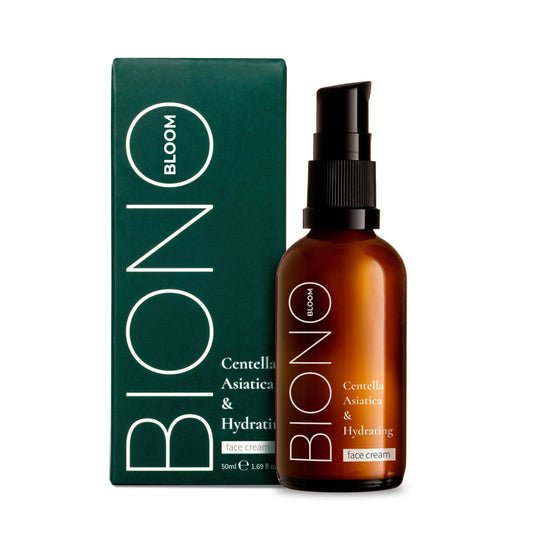
Centella asiatica extract is one of those ingredients that's hard to imagine leaving your skincare routine once you've discovered it. It combines tradition with science, gentleness with real effectiveness, and versatility with safety—a rare and valuable combination in the world of active cosmetic ingredients. Whether you struggle with sensitive, reactive, mature, or post-treatment skin, Centella asiatica facial cream will find its place in your ritual.
Centella asiatica in cosmetics is not a passing trend, but an ingredient with a well-established position in dermatology and cosmetology—supported by thousands of years of use and hundreds of modern studies. If you're looking for an ingredient that simultaneously soothes, regenerates, moisturizes, and supports collagen production without the risk of irritation, the answer is simple: it's time to learn more about Centella asiatica.