
Vitamin C for the face: benefits and rules of application
Among hundreds of active ingredients in modern cosmetics, only a few have such compelling scientific backing as vitamin C for the face. Dermatologists call it the gold standard of antioxidant care, and cosmetologists consider it a universal tool for achieving radiance, evening out skin tone, and preventing premature skin aging. At the same time, this ingredient has accumulated the most misconceptions: what concentration really works, why does serum darken in the bottle, can ascorbic acid be combined with retinol? Let's break everything down into its constituent parts — no myths, but with practical tips that actually work in daily skincare.
Vitamin C for facial skin
Vitamin C for the face is not just a trendy ingredient on a pretty label, but an active substance with proven effectiveness. Ascorbic acid participates in collagen synthesis, neutralizes free radicals, and inhibits excessive melanin production. Simply put: it helps the skin maintain firmness, protects it from aggressive urban environments and sun, and gradually lightens hyperpigmentation and post-acne marks.
It's worth knowing that the body does not produce vitamin C on its own, and only a small part of it reaches the skin from food. This is why topical application — serums, creams, concentrates — yields much more visible results than oranges for breakfast. Regular application of a good vitamin C cosmetic for 8–12 weeks can genuinely change the quality of the skin: even out skin tone, restore a healthy glow, and make fine wrinkles less visible.

How vitamin C works in the skin: mechanism of action
The main superpower of ascorbic acid is antioxidant protection. Every day, facial skin is exposed to UV radiation, car exhaust, cigarette smoke, and even blue light from screens. All of this triggers the formation of free radicals — unstable molecules that destroy collagen, elastin, and cell membranes. Vitamin C intercepts and neutralizes these molecules, effectively acting as a shield against photoaging.
The second function is participation in collagen synthesis. Ascorbic acid is a cofactor for enzymes without which collagen fibers simply do not form properly. In practice, this means that skin with an adequate level of vitamin C retains its density and elasticity longer. The third property is its effect on hyperpigmentation: the ingredient inhibits the tyrosinase enzyme responsible for melanin production, gradually lightening sun spots and post-inflammatory marks.
In summary, regular use of vitamin C for facial skin yields the following results:
- protection against free radicals and premature photoaging;
- stimulation of native collagen production and improved firmness;
- lightening of hyperpigmentation, post-acne marks, and evening out skin tone;
- a healthy glow and fresh appearance even when tired;
- alleviation of inflammation thanks to a gentle anti-inflammatory effect;
- enhanced effectiveness of sunscreen.
Forms of vitamin C in cosmetics: which one to choose
On labels, you can find a dozen different names, and they all refer to vitamin C — but with different characteristics. The classic is L-ascorbic acid. This is the most thoroughly researched and most active form, providing the fastest visible results. Its weak point is instability: it oxidizes under the influence of light and air, and at concentrations above 15% can irritate sensitive skin.
For those whose skin reacts with redness to active skincare, derivatives have been created: ascorbyl glucoside, magnesium ascorbyl phosphate, ethylated ascorbic acid, or tetrahexyldecyl ascorbate. These are more stable, gentler, and gradually convert into the active form within the skin. The effects appear more slowly, but without stinging or peeling. For example, tetrahexyldecyl ascorbate is a fat-soluble form that penetrates deeper into the epidermis and works perfectly for dry and mature skin.
The practical rule is simple: young, oily or combination skin, without signs of sensitivity, tolerates pure ascorbic acid at 10–15% concentration well. Dry, thin, and reactive skin will feel better with derivative forms. And if you're just starting your journey with active skincare, begin with a 5–10% concentration and observe your skin's reaction for two weeks.
Vitamin C serum: what to look for when choosing
Serum is the most popular and effective format because it contains a high concentration of the active ingredient in a light texture that quickly penetrates the skin. But not every bottle labeled "Vitamin C" is equally valuable. An effective product is a combination of the right form, appropriate concentration, stabilizers, and thoughtful packaging. A clear jar with a wide opening is a warning sign: the active ingredient will oxidize in it within a few weeks.
Experienced users know a simple trick: fresh serum with pure ascorbic acid should be colorless or slightly yellowish. If the cosmetic has taken on an intensely yellow-orange or brown hue, the vitamin C has oxidized and will no longer provide benefits, and sometimes may even cause irritation.
Here is a short checklist for choosing a good vitamin C serum:
- concentration of 5–20% depending on experience and skin type;
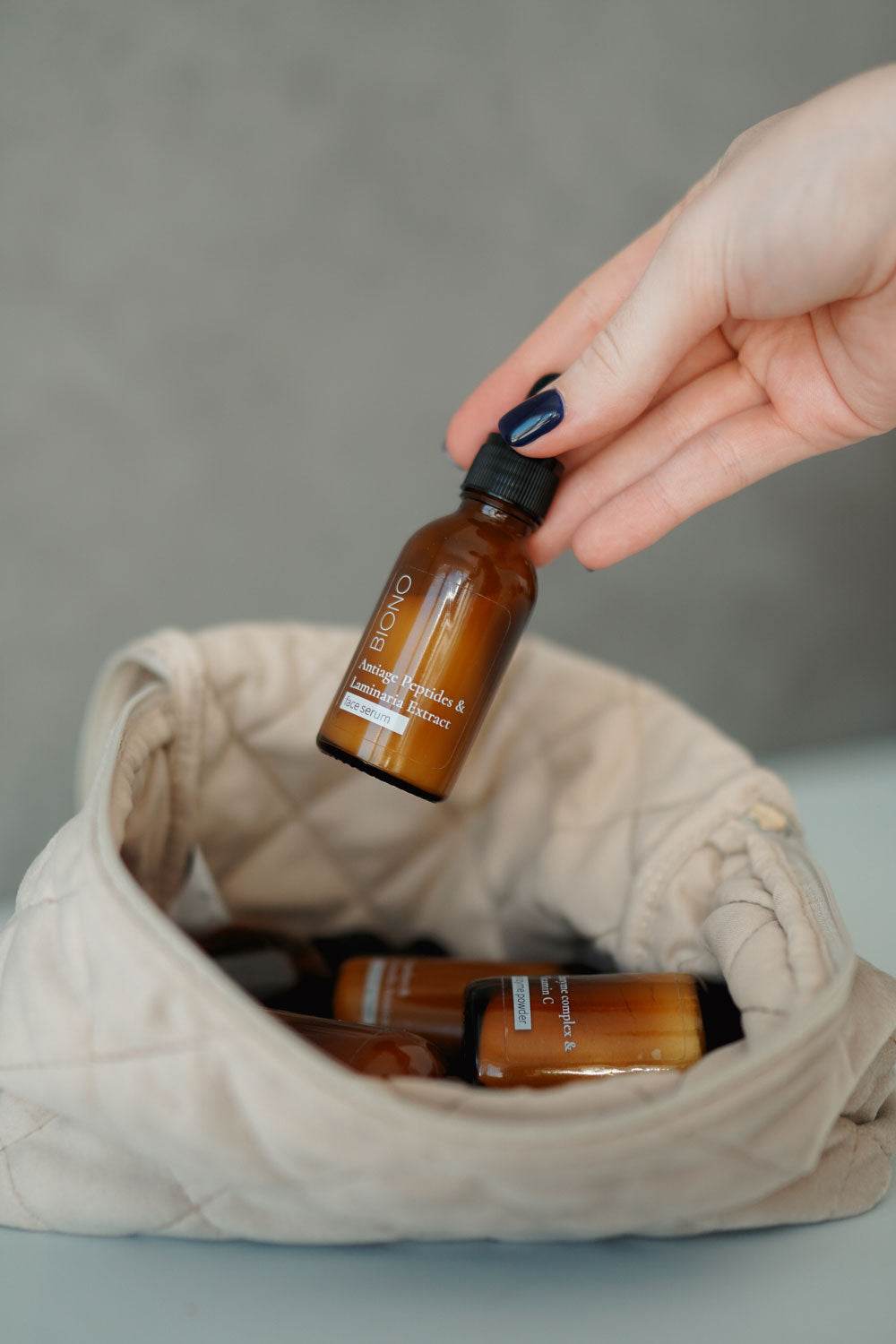
- dark glass bottle or airless pump packaging;
- presence of vitamin E and ferulic acid in the composition — they stabilize the formula and enhance antioxidant action;
- pH in the range of 2.5–3.5 for pure ascorbic acid;
- no significant change in color or foreign smell;
- use-by date after opening — preferably up to 3 months.

How to apply vitamin C to your face correctly
The ideal time for vitamin C is morning. It is during the day that the skin suffers most from UV radiation and urban air, so an antioxidant shield is useful from the morning. The classic skincare routine looks like this: cleansing, toner, vitamin C serum, moisturizer, and obligatory SPF 30–50 sunscreen. The "vitamin C + SPF" duo works synergistically: studies show that together they protect the skin from photodamage much better than each individually.
Quantity matters: 3–4 drops of serum are enough for the entire face and neck. Apply the product to dry skin — after a damp toner, it's worth waiting a minute, as moisture can exacerbate stinging caused by the acidic formula. A slight tingling in the first few minutes after application is a normal reaction to the low pH, but persistent burning, itching, or redness is a signal to reduce the concentration or switch to a gentler derivative form.
It's good to start gradually: for the first two weeks, use the product every other day, and only when the skin gets used to it, switch to daily use. Realistic expectations are also important: the first glow and freshness are visible after 2–3 weeks, but working on hyperpigmentation and skin tone requires 8–12 weeks of systematic care. Vitamin C is a marathon, not a sprint.
What to combine vitamin C with, and what to avoid
Skillful combinations can multiply the effect of skincare. The best partner for ascorbic acid is vitamin E (tocopherol): together they form a powerful antioxidant tandem in which each ingredient renews the activity of the other. Ferulic acid further stabilizes this pair and, as studies show, increases the photoprotective effect several times over. Hyaluronic acid is also a great neighbor — it compensates for any dryness caused by the acidic formula.
The situation with niacinamide is interesting: an old myth says these ingredients don't get along, but modern stable formulas cooperate calmly. If you have doubts, separate them in time: vitamin C in the morning, niacinamide in the evening. Real caution, however, is required for combinations with other strong active ingredients in a single routine.
Remember a few rules for safe combinations:
- vitamin C + SPF — an essential morning duo protecting against photoaging;
- vitamin C + vitamin E + ferulic acid — an exemplary antioxidant formula;
- vitamin C + retinol — better to separate: acid in the morning, retinoid in the evening;
- vitamin C + AHA/BHA acids — not in the same routine, to avoid overwhelming the skin;
- vitamin C + benzoyl peroxide — avoid simultaneous application, as ingredients deactivate each other.
Common mistakes in using vitamin C
The most typical mistake is chasing the maximum concentration. The logic "the more percentage, the faster the effect" doesn't work here: studies show that the effectiveness of ascorbic acid increases roughly up to 20%, and above this limit, only the risk of irritation increases. For most skin types, the optimal range is 10–15% — and this is entirely sufficient to see results.
The second common situation from practice: someone buys a good serum, places it on a bathroom shelf by the window — and after a month, they have a brown liquid of no value. Vitamin C is afraid of light, heat, and air, so store the bottle tightly closed in a dark, cool place, and if you wish, even in the refrigerator. The third mistake is a lack of regularity: applying "from time to time" does not produce the cumulative effect on which the entire action of this ingredient is based.
Separately, it's worth mentioning ignoring sun protection. Paradoxically, some users believe that antioxidant serum replaces SPF. This is not the case: vitamin C enhances protection but does not block UV radiation. Without sunscreen, working on hyperpigmentation turns into a losing battle — the sun will create new spots faster than the active ingredient can lighten old ones.
Who is vitamin C for facial skin suitable for?
Versatility is one of the main advantages of this ingredient. It is effective from the age of 20-25 as a prevention against the first signs of aging and protection against urban environments. For skin over 30, vitamin C becomes a support in maintaining collagen synthesis, and after 40, it is an important element of an anti-aging strategy alongside retinoids and peptides. For those with dull and tired skin, it restores radiance, and for those struggling with post-acne marks, it helps even out skin tone.
However, there are situations where caution is advised. In cases of active rosacea, eczema, or a damaged protective barrier, pure ascorbic acid can intensify irritation — in such cases, it is better to choose mild derivative forms or regenerate the skin first. Pregnant and breastfeeding women can use vitamin C without fear — it is even recommended as a safe alternative to retinol. And before the first use of any concentrated product, perform a patch test on a small area of skin behind the ear or in the crook of the elbow — and evaluate the reaction after 24 hours.
Practice shows: properly selected form and concentration make vitamin C comfortable even for sensitive skin. The most important thing is to listen to your own sensations, not to force adaptation, and to give the product time to fully show its capabilities.
Why vitamin C deserves a place in your skincare routine
Vitamin C for the face is a rare example of an ingredient equally valued by dermatologists, cosmetologists, and everyday users. It works simultaneously in three directions: protects against premature aging, lightens hyperpigmentation, and stimulates collagen production. This is a case where a single serum in your morning routine can noticeably change the quality of your skin in just a few months — provided you use it regularly, store it properly, and always use sun protection.
Choose the form and concentration appropriate for your skin type, introduce the ingredient gradually, and don't expect a miracle after a week — the cumulative effect of vitamin C develops over time, but the result is worth the patience. Even skin tone, a healthy glow, and firmness are entirely achievable goals if you make this ingredient a constant companion in your skincare.